Yves Hughes · 2 September 2026
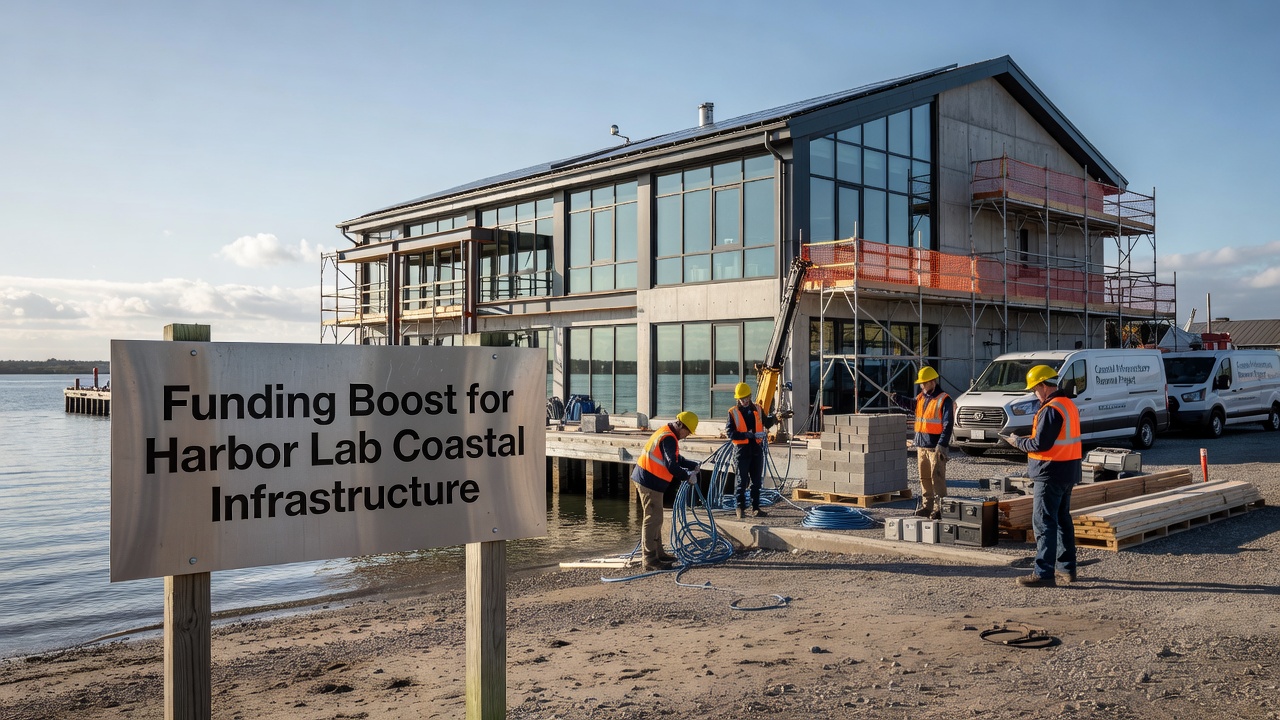
Harbor Laboratory Research has secured a major funding boost to strengthen its coastal lab infrastructure. The announcement highlights the importance of investing in facilities dedicated to studying marine environments and coastal dynamics.
Breakdown of the Infrastructure Investment
The grant amounts to 5.2 million pounds, sourced from the Department for Environment, Food and Rural Affairs along with industry partners. Funds will facilitate the building of a new extension to the main laboratory complex, equipped with state-of-the-art wet labs for seawater analysis. Furthermore, upgrades to the power supply and data transmission systems will ensure uninterrupted research operations even during adverse weather events.
Specialized equipment such as autonomous underwater vehicles and high-resolution imaging tools are also part of the procurement plan. These tools will enable more precise monitoring of ocean currents and sediment movements along the harbor areas.
Environmental impact assessments have already been completed to minimize disruption to local ecosystems during construction phases. Monitoring protocols will be established to track the effectiveness of these infrastructure changes over time, providing valuable insights for future projects at similar coastal sites across the region.
Long-Term Research Advancements
This infrastructure enhancement is set to propel forward several key research programs focused on sustainable fisheries, pollution tracking, and habitat restoration. Scientists at the lab anticipate publishing findings that could influence international maritime regulations.
Partnerships with universities will allow for joint expeditions and shared data repositories, fostering a collaborative approach to solving complex coastal issues. Training workshops for early-career researchers will also be expanded, ensuring the next generation of scientists benefits from the improved facilities.
Overall, the funding boost positions Harbor Laboratory Research as a leader in coastal science, with potential for groundbreaking discoveries in the coming years that support evidence-based policy and conservation strategies.