Casey Albrecht · 20 September 2026
Vessel Noise Signatures Alter Fish Behavior in High-Traffic Maritime Zones
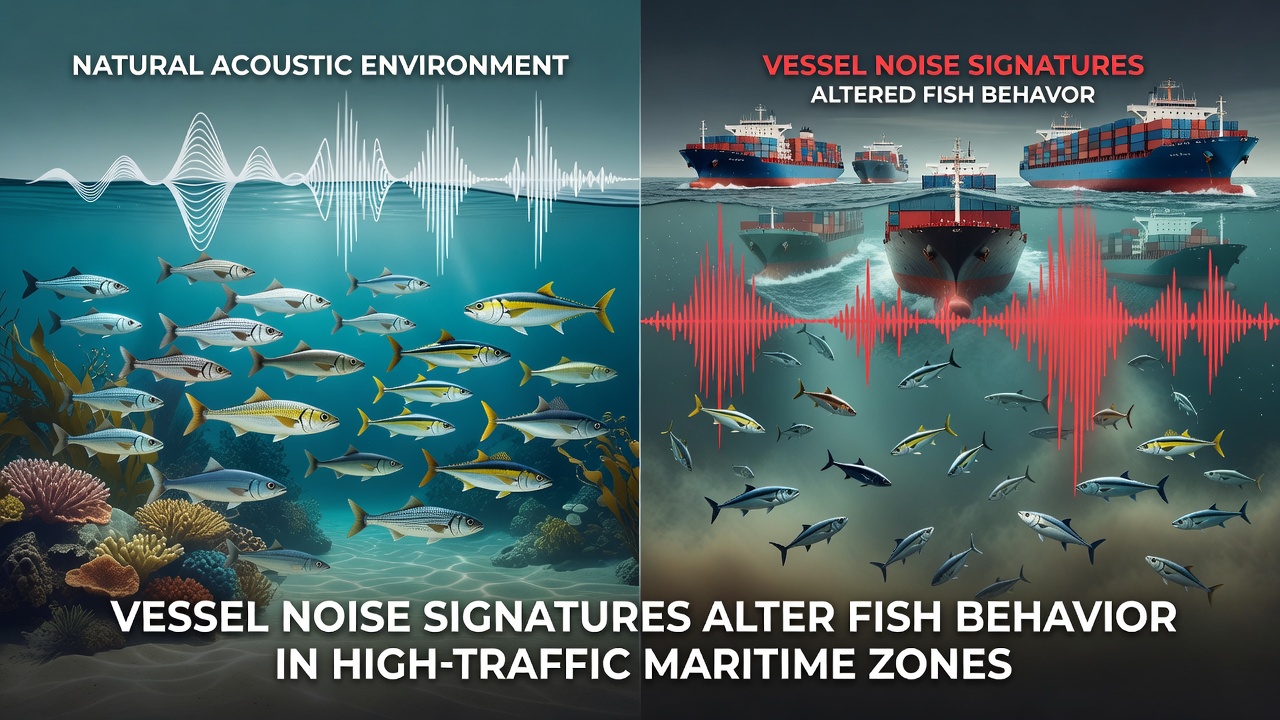
Commercial shipping routes generate persistent underwater sound fields that researchers now link directly to shifts in fish migration patterns and feeding routines across multiple ocean basins. Data from acoustic monitoring stations show that vessel noise signatures often exceed natural ambient levels by 20 to 30 decibels in corridors such as the English Channel and the Strait of Malacca, where annual traffic exceeds 100,000 passages.
Studies conducted by Fisheries and Oceans Canada indicate that cod and haddock schools alter their vertical positioning within minutes of a large container ship passing overhead, moving closer to the seabed and reducing foraging activity for up to 45 minutes afterward. Similar patterns appear in data collected along the Great Barrier Reef shipping lanes, where Australian Institute of Marine Science teams recorded decreased vocalization rates among coral reef fish during peak traffic hours.
Acoustic Characteristics of Modern Vessel Traffic
Engine propeller combinations produce low-frequency tones between 50 and 500 hertz that travel long distances through water, while cavitation noise adds broadband energy above 1 kilohertz. Observers note that these combined signatures create distinct temporal rhythms tied to vessel speed and load, allowing researchers to match specific sound profiles to ship types using automated classification systems deployed since early 2025.
High-traffic zones amplify these effects because successive vessels arrive before previous sound fields decay, resulting in continuous elevation of background noise rather than isolated events. Measurements taken in September 2026 near the Port of Rotterdam revealed sustained levels above 110 decibels for 18 consecutive hours during a period of dense tanker and bulk carrier movements.
Behavioral Responses Across Species
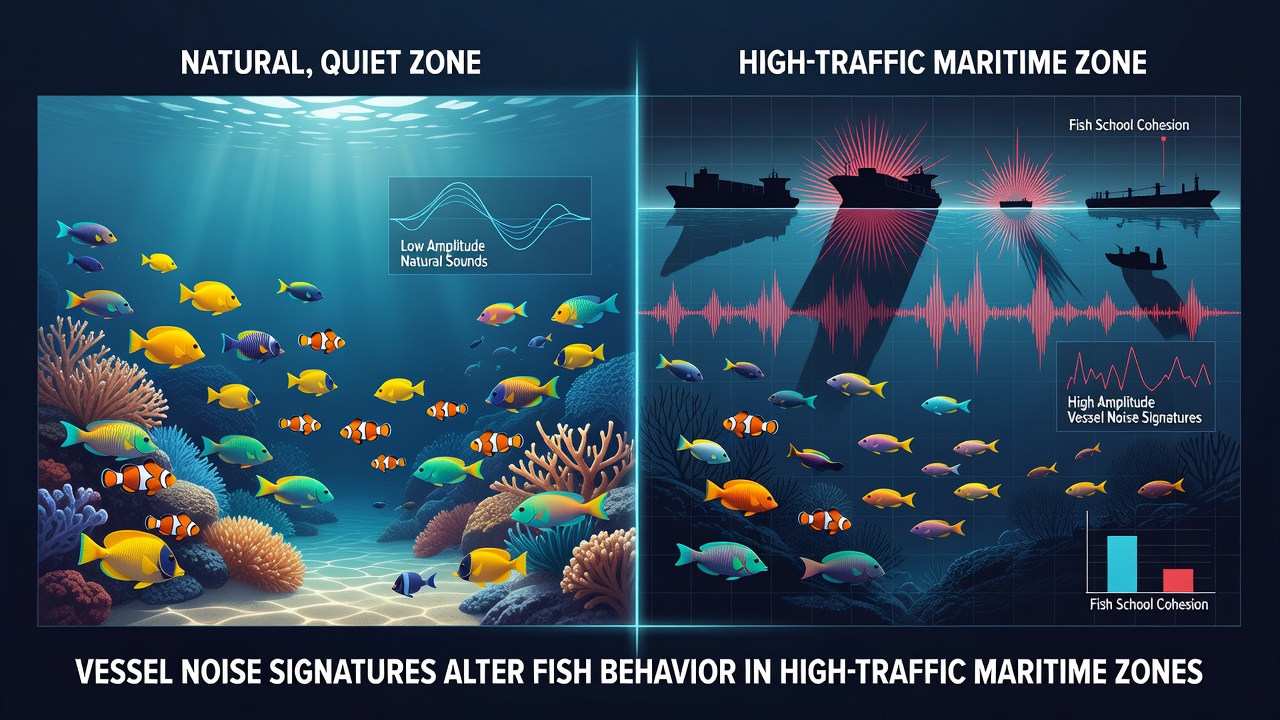
Schooling species such as herring and mackerel exhibit increased startle responses and tighter group formations when exposed to vessel passages, according to tagged-fish telemetry arrays in the North Sea. Solitary predators including tuna and sharks show different adjustments, with some individuals shifting hunting grounds several kilometers away from shipping lanes during daylight hours when traffic peaks.
Reproductive behaviors also change under chronic exposure. Courtship calls in damselfish decline in both frequency and duration near busy anchorages, and larval settlement rates drop in areas where noise masks the natural reef soundscape that guides young fish to suitable habitat. Those who have analyzed multi-year datasets from the Baltic Sea report that these disruptions compound over successive breeding seasons, producing measurable reductions in local recruitment.
Monitoring Networks and Data Collection
Fixed hydrophone arrays combined with autonomous underwater vehicles now provide continuous coverage in several high-traffic corridors, feeding real-time information to marine management centers. These systems distinguish between different vessel classes by analyzing spectral peaks and temporal patterns, allowing authorities to correlate specific traffic events with observed fish displacements.
Integration with vessel tracking data from automatic identification systems enables precise mapping of exposure zones, revealing that fish avoidance extends several kilometers beyond the actual shipping lane boundaries. Researchers processing records from the Gulf of St. Lawrence have documented avoidance zones that overlap with traditional fishing grounds, creating indirect effects on commercial catch rates during heavy traffic periods.
Management Approaches Under Development
Speed reduction trials in the Santa Barbara Channel demonstrated that lowering vessel speeds from 12 to 8 knots decreased broadband noise by approximately 6 decibels while maintaining acceptable transit times for most operators. Port authorities in Singapore have tested similar measures during nighttime hours, when fish activity often peaks, and recorded corresponding increases in fish vocalization diversity within protected reef patches.
Route optimization software that incorporates fish distribution models is entering operational use along the west coast of North America, where regulators require vessels to maintain minimum distances from known spawning aggregations. These adjustments rely on seasonal acoustic surveys that update avoidance polygons every two weeks during peak migration windows.
Conclusion
Long-term acoustic and biological datasets continue to clarify how vessel noise signatures reshape fish distribution adn activity patterns in heavily used maritime corridors. Coordinated monitoring programs across different ocean regions supply the evidence base needed for traffic management decisions that balance commercial requirements with marine ecosystem function. Ongoing refinements to both measurement technology and operational protocols reflect the accumulating record of measurable responses in wild fish populations.